![Transparent_Background_(2)[1].png](https://static.wixstatic.com/media/a3c8c9_afcffc5252d34b0c97d7dfcf9efa976b~mv2.png/v1/fill/w_149,h_147,al_c,q_85,usm_0.66_1.00_0.01,enc_avif,quality_auto/Transparent_Background_(2)%5B1%5D.png)
WabiSabi entrance door

Updated: Apr 28
Mending the Door
The entrance to the courtyard had been slowly falling apart for decades. By the time we first pushed it open, the bottom of the old plank door had rotted away entirely — a ragged gap where solid wood had been.
The obvious fix would have been a new board. But from the moment I walked into this courtyard — its eardeflower tree, its great stone blocks, its massive timber beams — I felt something closer to Japan than Liguria. A quality of presence. Of beautiful impermanence.
So I followed it.
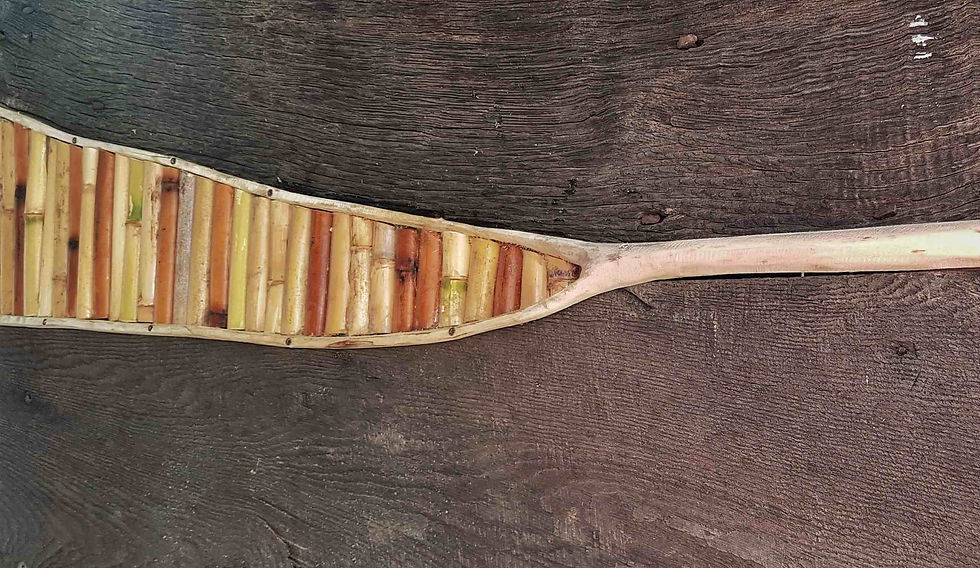
I found a curved branch, cleaned it, and let it frame the wound in the door rather than hide it. Then I filled the space with local canes — some freshly cut, some salvaged from the old *secatoio*, the chestnut drying chamber that once sustained this whole valley. Still dark with that ancient smoke. Each piece a different tone: straw, amber, ochre, honey. The planks were fed with raw linseed oil. The handle carved from wood found in the house itself.
Nothing brought in. Nothing forced.
The door is not restored. It is honest — held, framed, and quietly alive with the memory of this place.
This is wabi sabi: not perfection recovered, but beauty found inside impermanence.


Comments